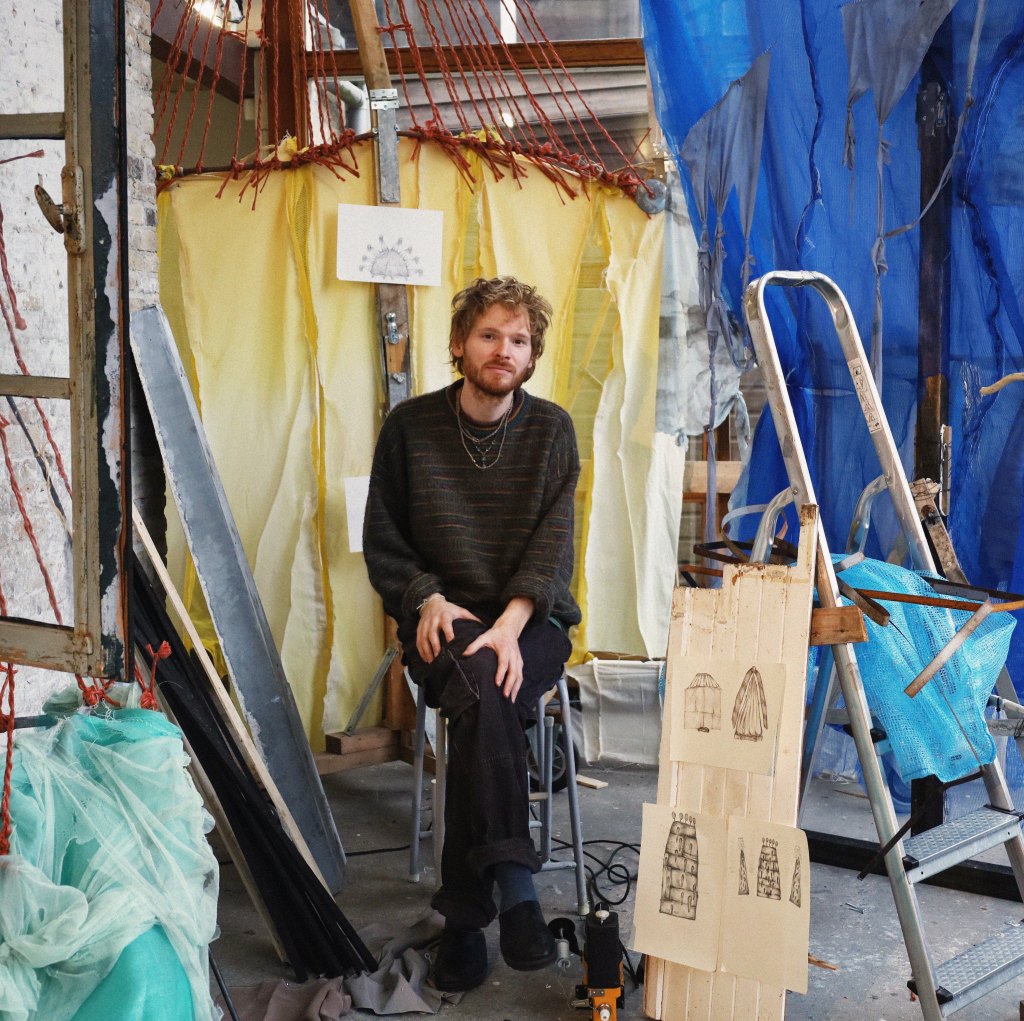
In the performances, body and sculpture merge into hybrid entities that blur the boundary between living and non-living. The performances unfold as slow, physical choreographies in which movement, balance, touch, and tension define the structure. An organic rhythm emerges in which body and material constantly influence each other, as parts of one breathing ecosystem.
An important element in the research is the fascination with insects such as the caddisfly larva and the garbage bug, which envelop themselves in debris from their environment to camouflage and protect themselves. Like these insects, temporary shells and worlds are built in which humans merge with their surroundings. In the work, this intertwining of humans and their environment is explored as something that can become visible and tangible. The performances and sculptures function as temporary ecosystems. The materials carry traces of their origins, while the bodies that touch them leave new traces behind. They are not static objects, but processes of continuous exchange and mutual transformation.
Presentations in Museums, Galleries, and Public Space
Verrijt has presented his sculptures as (on-going) performances in group exhibitions and solo exhibitions, such as at: Museum CODA Apeldoorn, EYE Museum Amsterdam (during the opening of Cinedans), Stroom Den Haag, Willem Twee ‘s-Hertogenbosch, AADK Murcia SP, Arti et Amicitiae Amsterdam, De Fabriek Eindhoven, United-C Eindhoven, Art Rotterdam, Verkadefabriek ‘s-Hertogenbosch, Parktheater Eindhoven and Schouwburg Tilburg.
Verrijt also regularly presents sculptures in combination with films of the performances, such as at: ARV.International Veliko Tarnovo BG, Museum Jan Cunen Oss, Mediamatic Amsterdam, Marres Maastricht, Cacaofabriek Helmond, Das Leben Am Haverkamp Den Haag, United-C Eindhoven & Kunsthuis SYB Beetsterzwaag.
He has also carried out various presentations and interventions in public space, such as at H3H Biennale Oosterhout, Paltz Biennale Soest, Derde Wal Nijmegen, Yart.be Ghent, and Processions in Nijmegen & Baarle-Nassau/Hertog.
Currently supported by Mondriaan Fonds & Kunstloc Brabant
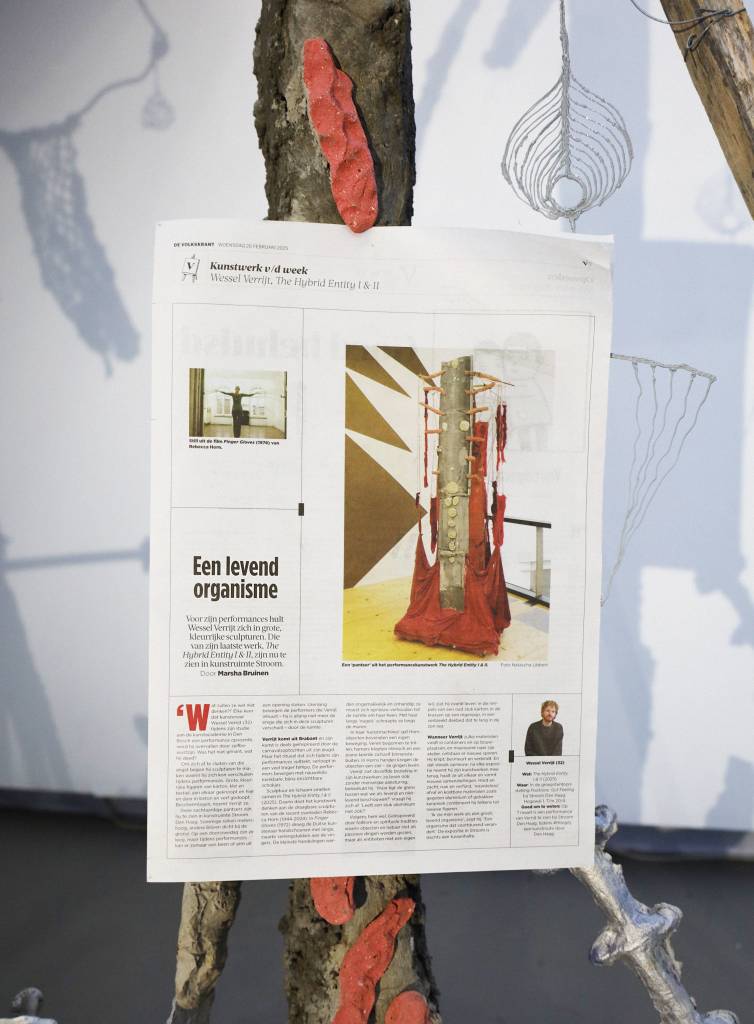
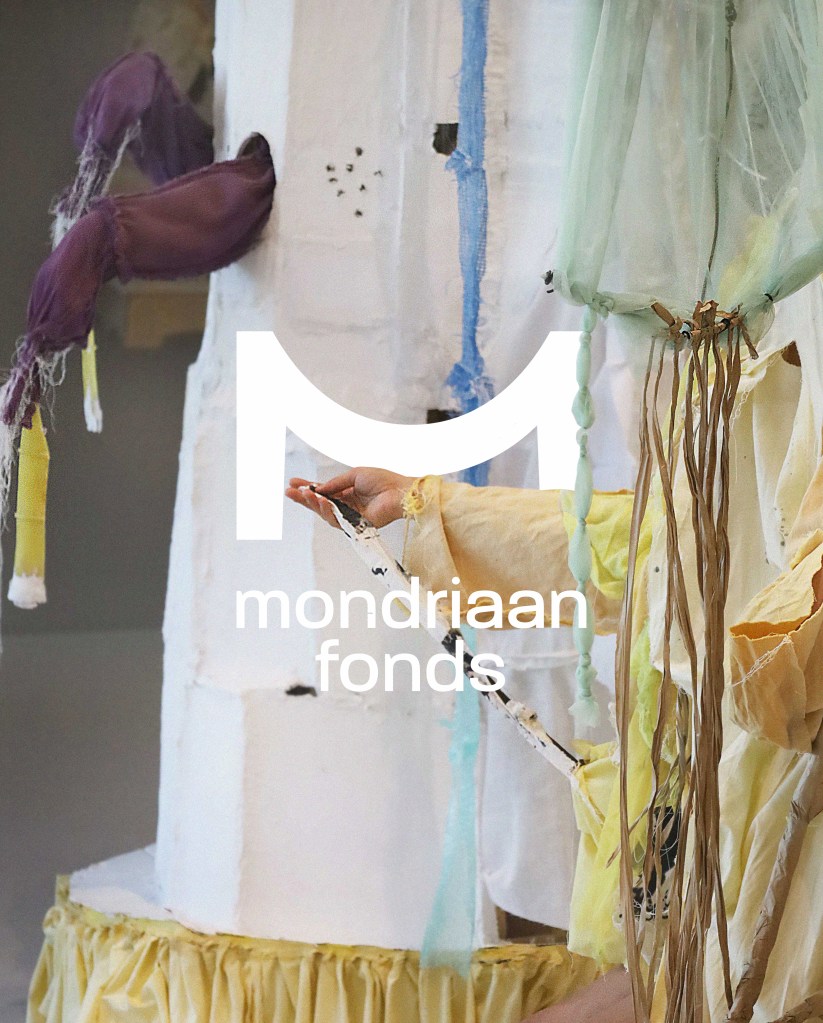
In 2025, I was granted the Artist Basic (Kunstenaar Basis) by the Mondriaan Fund.
 Wessel Verrijt